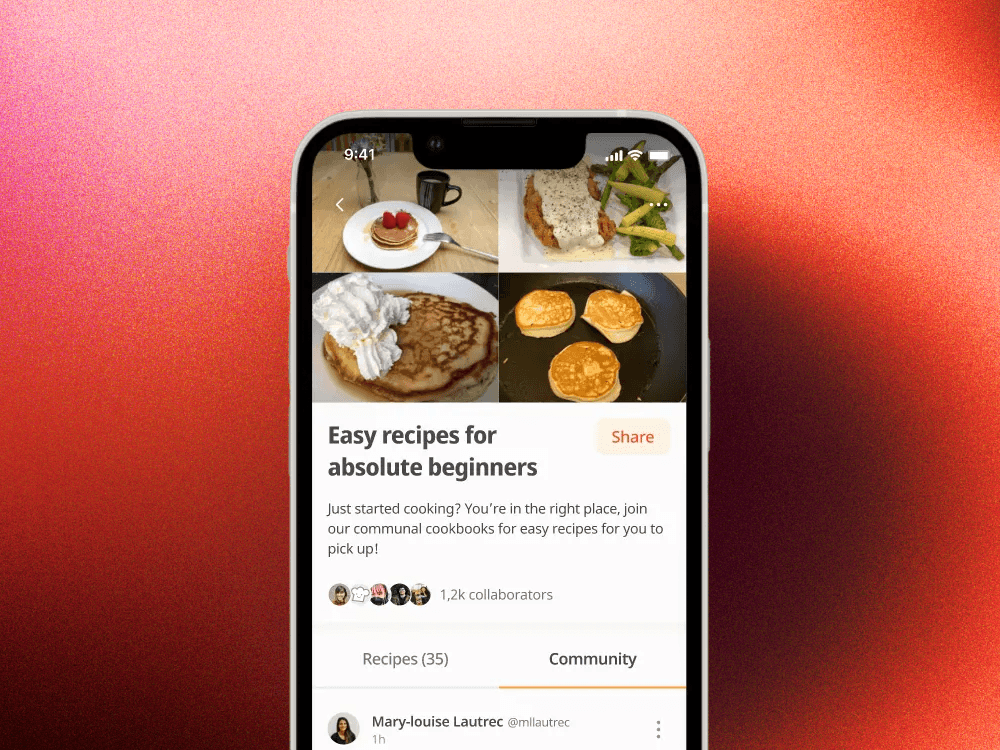
Mob is a recipe & meal planning app with +200k paying subscribers, based in the UK.
I joined Mob as their first designer and a member of the leadership team to transform the then 90k subscribers business to over 200k subscribers at the end of 2025. (143% growth)
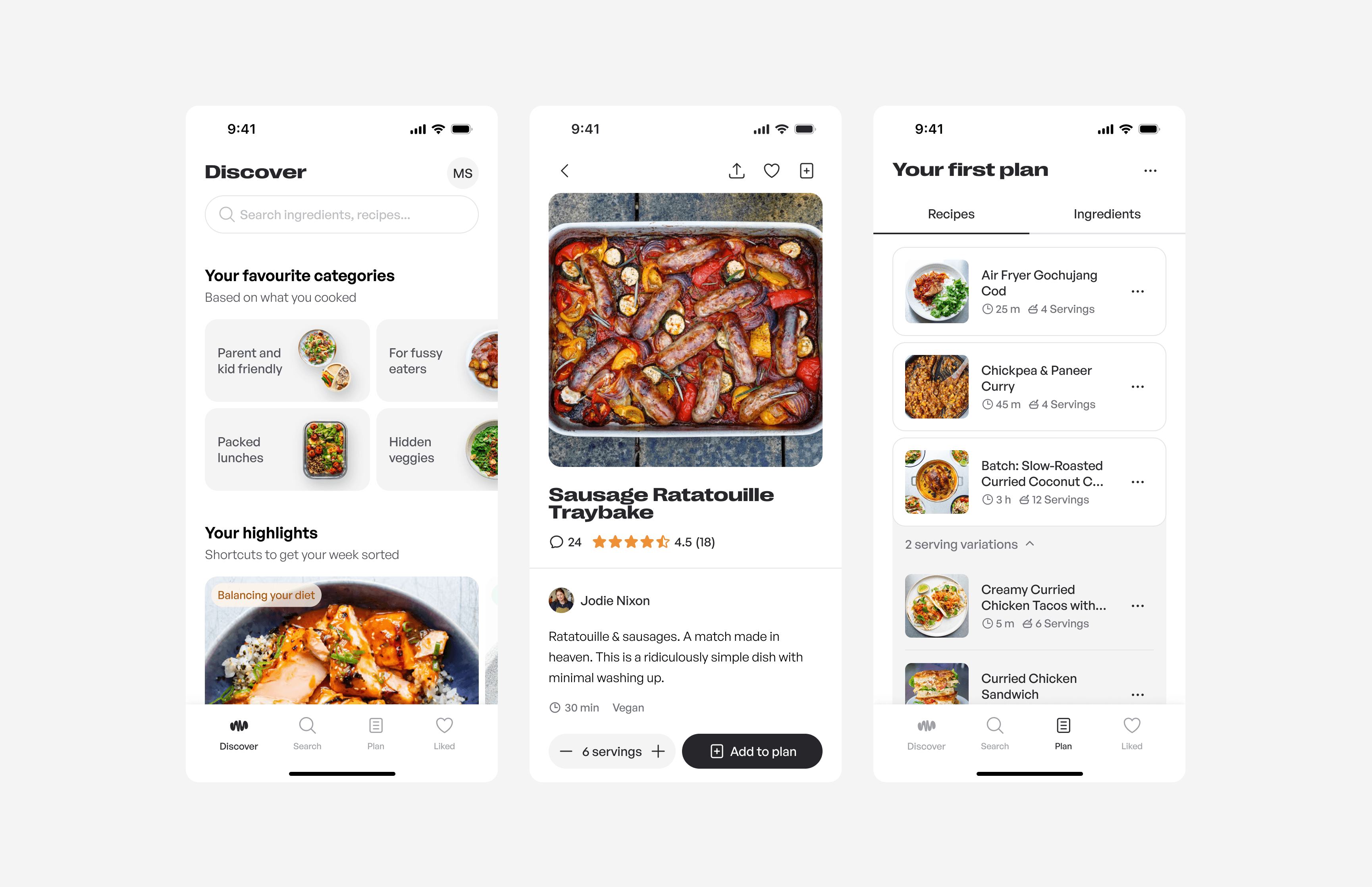
My key role is to shift the product from a recipe platform to a smart meal planner.
Below is a list of projects I spearheaded, split into 3 pillars:
Innovation & Automation
Habit Forming
Personalisation
Pillar A: Innovation & Automation
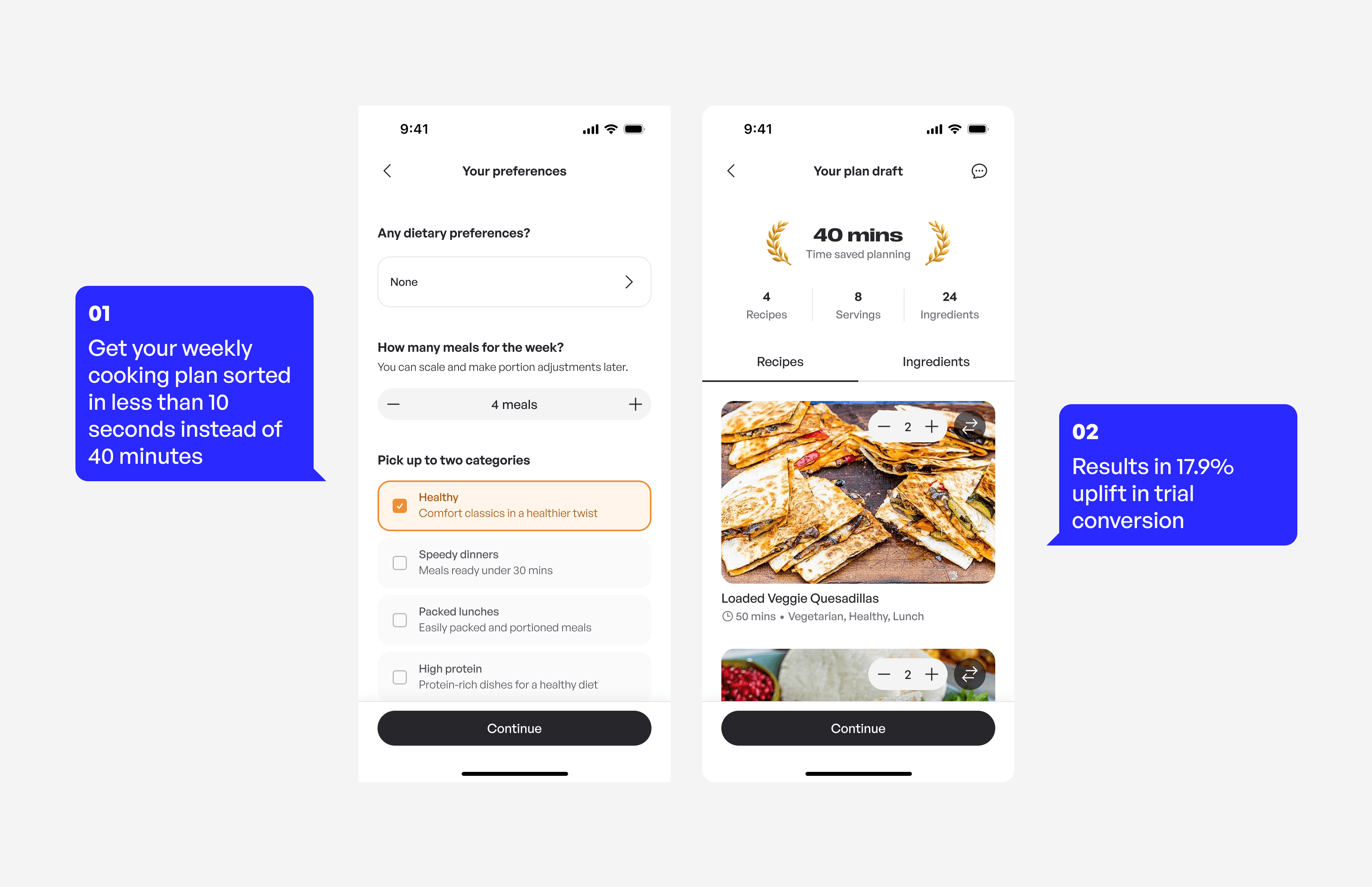
Automated Meal Planner: Validating the Use Case of Meal Plan Automation
I worked with the Product Lead to de-risk our AI roadmap before committing engineering resources. We simulated the experience using manual spreadsheet experiments to test user appetite. While this low-fidelity test drove a 17.9% lift in trial conversion, follow up interviews revealed users hesitated to commit because they lacked agency over the selection.
Smart Suggestions: The Strategic Pivot to Co-Pilot Meal Planner
Acting on the insight that Agency > Automation, I aligned the squad around a Co-Pilot strategy instead of full automation. By giving users editorial control over the suggestions, we achieved a 19.4% conversion lift. This approach prevented costly engineering rework on the wrong features and validated that retention relies on human-led decisions.
Pillar B: Habit Formation
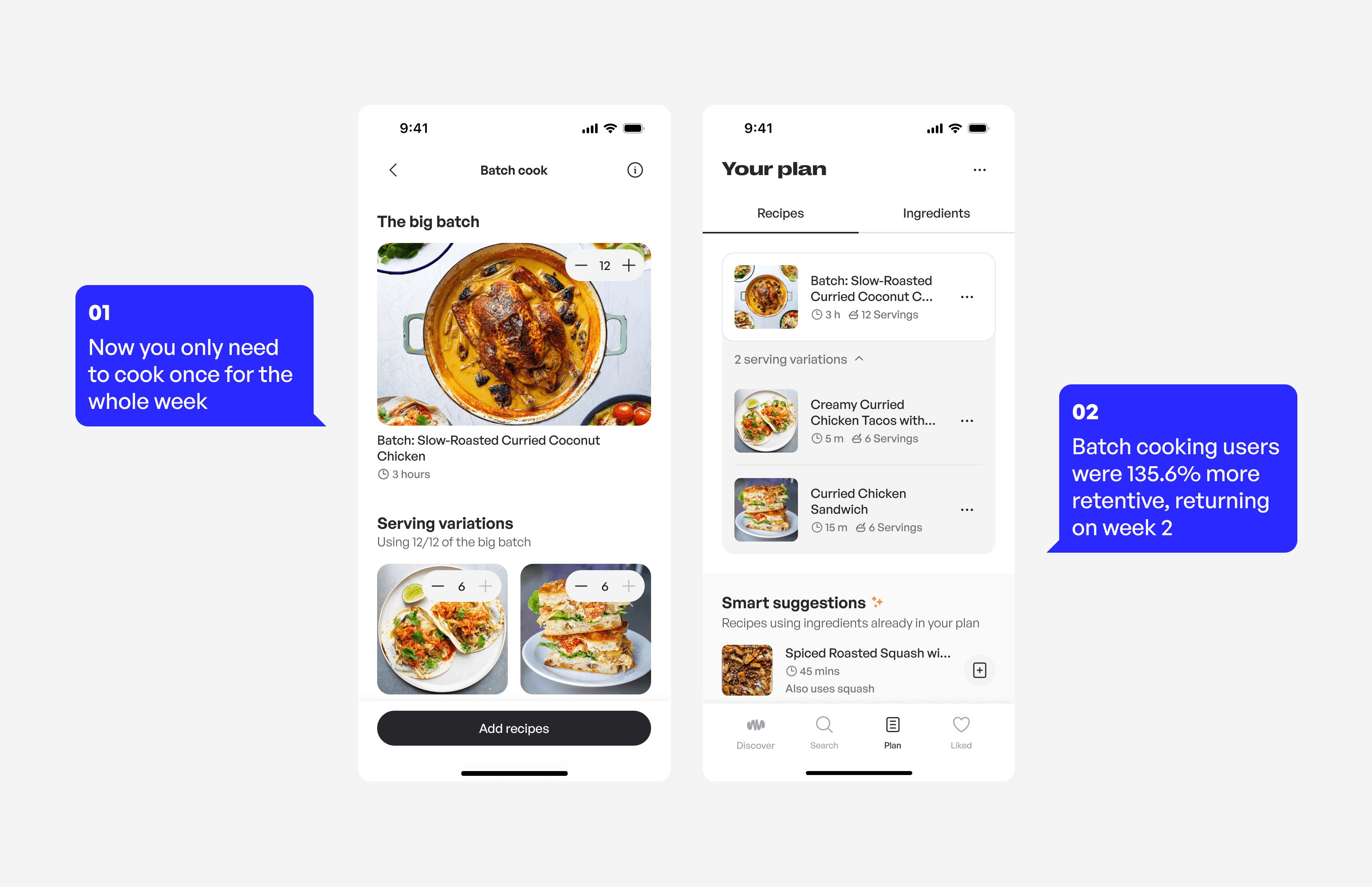
Batch Cooking: Cook Once For the Whole Week
Users adopting Batch Cooking showed a massive 135.6% increase in retention (Day 8/9) compared to the baseline. This project validated the year long product focus to weekly meal planning.
Pillar C: Personalisation
Personalised Discovery: Cemented the 3 Phases of Personalisation
In Q3, I proposed the plan to inject the element of personalisation to the product. Using engagement data of our 7 user groups and what thy interact with in Q2, I proposed 3 phases of personalisation below.
Cold start phase: Gather and use deeper user preferences
Behavioral phase: Tailor the discovery feed based on behavioural insights as we shape the user profile.
User profile phase: Predictive suggestions based on cooking history and interests.
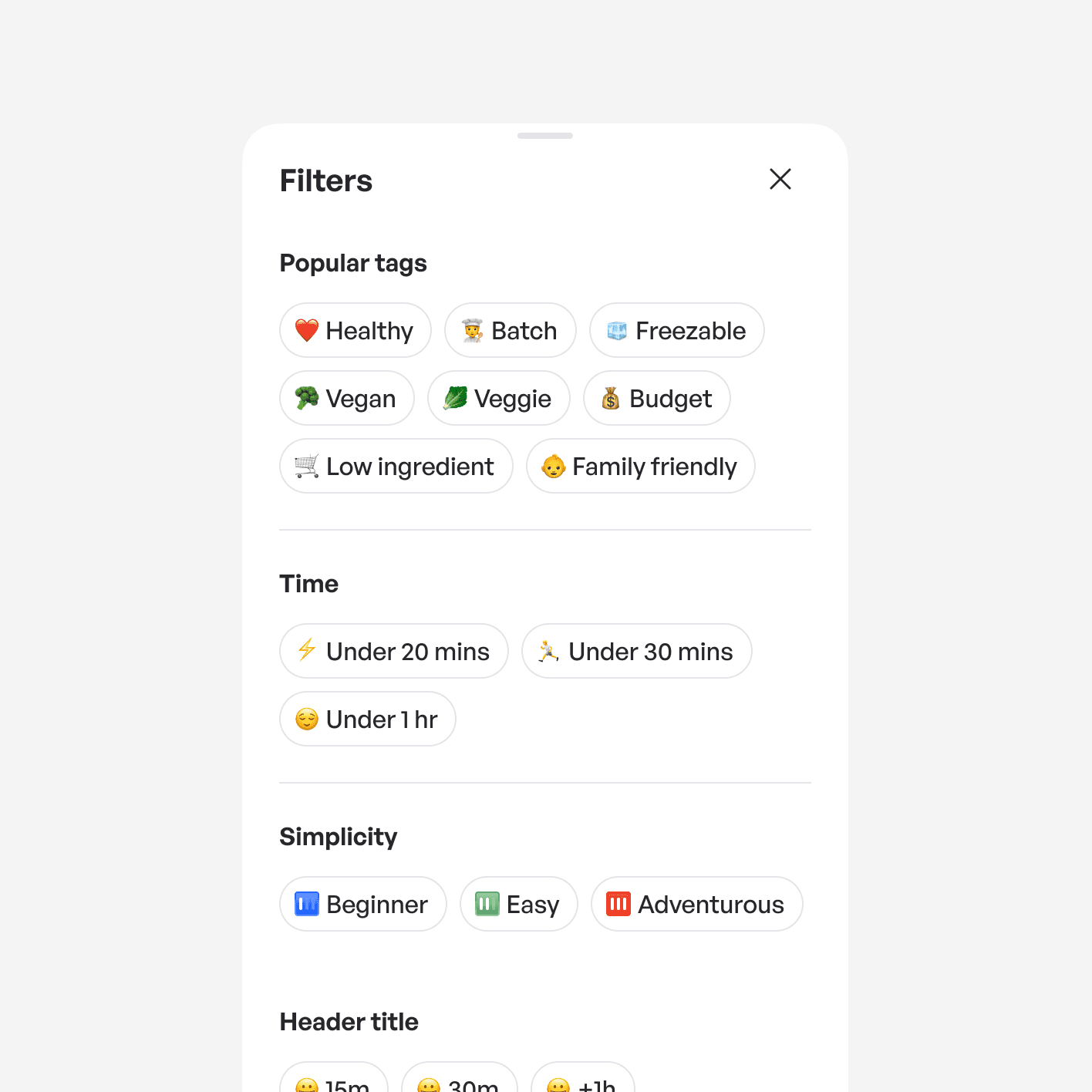
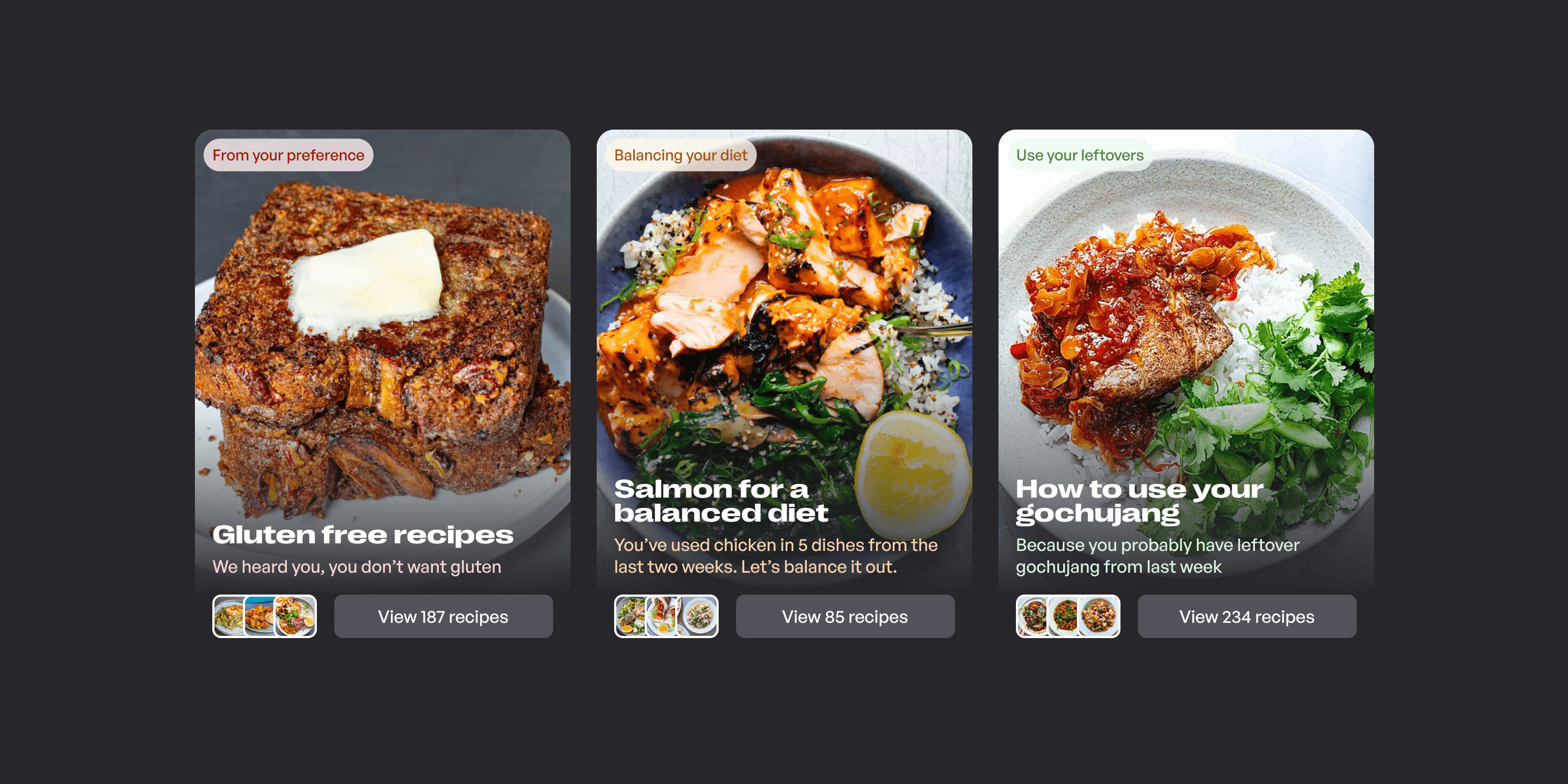
2 experiments which are contextual collections and improved search filters drove a 12.7% uplift in trial conversion, validating this direction and positioning Mob for a strong start of phase 2 in 2026.
Takeaways